

Most people who buy solar panels without a battery are giving away the best part of their investment. During the day, their panels make more power than the house needs. That extra power flows back to the grid for a small credit. Then at night, the family comes home, turns on the lights, cooks dinner, and pays full price for electricity from the grid.
A solar battery changes this. It stores the extra power your panels make during the day so you can use it later when the sun goes down. This simple shift does more than reduce your bill. It changes how your benefits of solar battery storage at home.
This article explains the real benefits of adding a battery to your home solar system. It covers savings, backup power, how long the equipment lasts, and what you should know before you buy. The information focuses on the actual experience of homeowners, not sales talk.
Why Storing Your Own Power Matters More Than You Think?
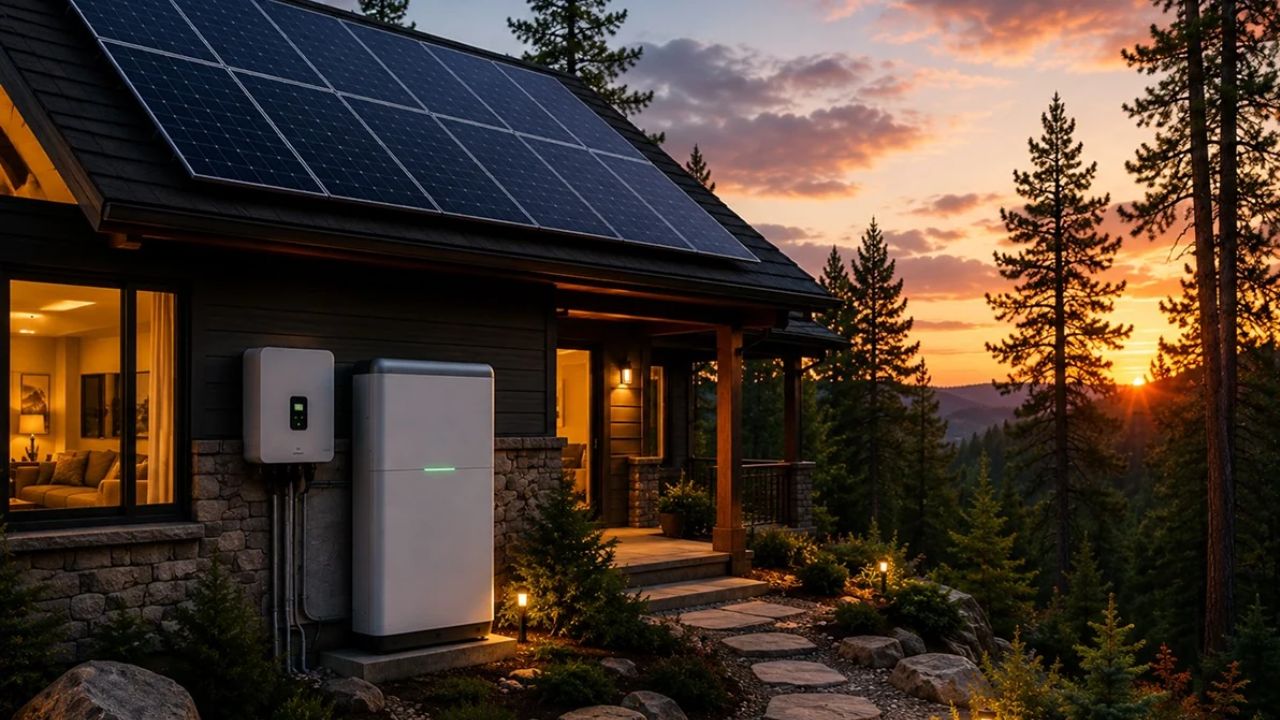
The financial case for a battery starts with a simple gap. Solar panels make power for free once they are installed. Grid electricity costs money every single month. When you store your own solar power and use it at night, you replace an expensive unit of grid electricity with a free unit of solar electricity.
Without a battery, a typical home uses only about 30 percent of the solar power its panels produce. The rest goes to the grid . With a properly sized battery, that self-use rate can climb to 60 or even 70 percent . In some cases, homes reach 80 percent independence from the grid .
The math becomes clear when you put numbers to it. A household that uses 4,000 kilowatt-hours of electricity per year and has a solar system making 5,000 kilowatt-hours will save around 525 euros per year without a battery. With a battery that raises self-use to 60 percent, the yearly savings jump to about 1,050 euros . That extra 525 euros per year comes from simply keeping and using power that would otherwise be sold cheaply and bought back at full price.
This gap between what you pay for grid power and what you earn from selling solar power is the core reason batteries make sense. In Germany, grid electricity costs around 33 cents per kilowatt-hour, while a new solar system produces power for roughly 10 to 13 cents . The difference is the value you capture when you store and use your own power.
Read Also: Solar Panel Maintenance Tips For Home
The Backup Power Benefit: What It Really Means
Many people buy a battery because they want the lights to stay on during a power cut. This is a real benefit, but it comes with an important condition that salespeople do not always explain clearly.
A standard solar system, even one with a battery, will shut down during a grid outage. This is a safety rule. It protects the people working on power lines nearby . If you want your battery to keep running your home when the grid goes down, you need a system designed for backup power from the start. This usually means a special inverter and specific wiring for the circuits you want to keep running .
If backup power matters to you, say so clearly when you get quotes. The installer needs to design the system for this purpose. You also need to decide which appliances matter most. Most backup systems power a few essential circuits, such as the fridge, lights, internet router, and maybe a medical device. Running the whole house, including heating and air conditioning, during an outage usually requires a much larger and more expensive system .
For homes in areas with frequent storms or an unreliable grid, the value of backup power goes beyond money. It is about comfort and safety. But it only works if the system is built for it.
How Long Does a Battery Last, and What Happens as It Ages?
A solar battery does not last forever, and it does not perform at full capacity for its entire life. Understanding this helps you plan realistically.
Most modern home batteries use lithium iron phosphate chemistry, often called LFP. These batteries typically come with a warranty of 10 to 15 years and are expected to last 15 years or more with normal use . The warranty usually guarantees that the battery will still hold at least 70 percent of its original capacity at the end of the warranty period . This means a battery that starts at 13 kilowatt-hours might hold around 9 or 10 kilowatt-hours after a decade. It still works. It just holds less.
Several things affect how quickly a battery ages. High heat is the biggest enemy. A battery installed in a hot garage or a spot with direct sun will age faster than one in a cool, shaded location . How deeply you discharge the battery regularly also matters. Most manufacturers recommend keeping the discharge within a safe range to protect the cells . The number of charge and discharge cycles adds up over time, but modern LFP batteries are rated for thousands of cycles, which is enough for daily use over many years .
The practical takeaway is this: a quality battery will serve you well for a long time, but you should expect its capacity to slowly decline. If you are relying on the battery for backup power during outages, it is wise to size the system a little larger to account for this decline over the years.
What a Battery Costs and How the Payback Works?
The cost of home batteries has fallen significantly in recent years. In Germany, installed battery capacity now costs between roughly 300 and 500 euros per kilowatt-hour . A typical home might need 5 to 12 kilowatt-hours of storage, depending on household size and energy use.
The payback period for a battery depends on several factors: how much you pay for grid electricity, how much of your solar power you can store and use, and whether any incentives apply. Across Germany, most systems pay for themselves in about 10 to 14 years . After that point, the savings continue and the system generates pure financial benefit.
One important factor is the age of your solar system. If your panels were installed years ago and are no longer receiving the old feed-in tariff, the power they make is extremely cheap, often just 3 or 4 cents per kilowatt-hour . For these older systems, storing and using that power instead of buying grid electricity at 33 cents is an enormous win. Germany has over 5.5 million rooftop solar systems that will gradually move out of the paid feed-in period, making batteries especially attractive for these homes .
For newer systems that still receive a feed-in payment, the calculation is slightly different. You need to compare what you earn from selling power to the grid against what you save by storing it and using it yourself. In most cases, using your own power is still the better deal, because the grid pays you only about 8 cents while charging you 33 cents for the same unit of benefits of solar battery storage at home.
A Smarter Way to Use the Battery: Time-of-Use and Dynamic Tariffs
A battery does not have to sit idle on cloudy days or in winter. A growing number of homeowners are using their batteries to take advantage of electricity prices that change throughout the day. This is called a dynamic tariff, and it opens a second way for the battery to save money.
Here is how it works. On a sunny day, the battery stores solar power for the evening. On a cloudy winter day when the panels make little power, the battery can charge from the grid overnight when electricity prices are very low. Then it discharges during the evening peak when prices are high . The difference between the low overnight price and the high evening price becomes profit. In Germany, overnight prices can drop to 3 to 8 cents per kilowatt-hour, while evening peak prices can reach 30 to 40 cents . A 10-kilowatt-hour battery doing this cycle can earn 2 to 3 euros per day, even without any sunshine .
This approach works best if you choose a slightly larger battery than you would need for solar storage alone. Adding 2 to 5 kilowatt-hours of extra capacity gives you room to store both solar power and cheap grid power . The battery then works for you year-round, not just in summer.
You May Also Like: What are the key challenges facing green technology
What to Check Before You Buy?
Before you commit to a battery, a few practical points deserve your attention.
First, decide whether backup power is a must-have or a nice-to-have. This changes the system design and the cost. If backup matters, make it clear from the first conversation with an installer.
Second, think about where the battery will go. A cool, dry, shaded spot helps the battery last longer. A hot garage or a location with direct sunlight will shorten its life .
Third, ask about the warranty details. The length of the warranty matters, but so does the capacity guarantee. A 15-year warranty that promises 70 percent capacity is different from a 10-year warranty with the same guarantee . Compare the full picture.
Fourth, check what incentives are available in your area. The federal government offers a reduced VAT rate of zero percent on solar systems and batteries, which lowers the purchase price directly . Some states and cities also offer their own programs, but these change often and budgets can run out quickly . The KfW bank offers low-interest loans for solar plus battery systems, though not direct grants . Always confirm the current status before you buy, because programs change.
Fifth, size the battery for your actual evening and night use. A battery that is too small will not capture enough of your solar power. A battery that is too large costs more than it needs to and may never fill up. A common rule of thumb is about 1 kilowatt-hour of storage for every 1,000 kilowatt-hours of yearly electricity use . A four-person household using 4,000 kilowatt-hours per year would do well with around 4 to 6 kilowatt-hours of usable capacity, though this varies with individual habits.
Conclusion
A solar battery is not a gadget or a luxury add-on. It is the piece that turns a solar system from a daytime power source into a full-time one. It captures the power your panels make when you are not home and delivers it when you are. It protects your home from outages if you design it for that purpose. And with the right approach, it pays for itself over time.
The benefits are real, but they depend on getting the details right. Size the system for your actual use. Design it for backup if that matters to you. Choose a cool location for the battery. And take advantage of the tax benefits and any local incentives that apply.